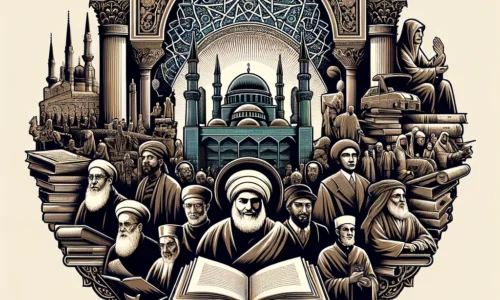
HIST 403: Islamic Revivalist Movements in History offers an in-depth exploration into the various Islamic revivalist movements that have emerged across different epochs, geographical regions, and cultural contexts. This course examines the socio-political, theological, and historical circumstances that have spurred these movements, aiming to understand their motivations, methodologies, and impacts on the Muslim world and beyond. From the early Islamic reform movements in response to the Mongol invasions to the contemporary Islamic revival in the 20th and 21st centuries, students will delve into the diverse expressions of Islamic revivalism and reform.
The course begins with a foundational understanding of what constitutes an Islamic revivalist movement, differentiating between terms like revivalism, reformism, and fundamentalism. We then trace the historical roots of these movements, including the influential works of scholars like Ibn Taymiyyah and the impact of colonialism on Muslim societies, which prompted a reassertion of Islamic identity and values. The course also covers significant movements such as the Wahhabi movement in Arabia, the Deobandi and Barelvi movements in South Asia, the Mahdi movement in Sudan, and the Iranian Revolution, among others.
Students will critically analyze the narratives, ideologies, and outcomes of these movements, understanding their contributions to Islamic thought, jurisprudence, and socio-political dynamics. The course also addresses the challenges faced by these movements, including internal divisions, external opposition, and the complexities of implementing Islamic governance in the modern state system.
Overall Objectives for this Course:
By the end of this course, students should be able to:
- Define and distinguish between Islamic revivalism, reformism, and fundamentalism.
- Understand the historical and theological background of Islamic revivalist movements.
- Analyze the causes and motivations behind various Islamic revivalist and reform movements.
- Assess the impact of these movements on Muslim societies and global Islam.
- Explore the relationships between revivalist movements and contemporary political, social, and cultural issues.
- Critically engage with primary and secondary sources on Islamic revivalist movements.
- Discuss the implementation of revivalist ideologies in different historical and geographical contexts.
- Evaluate the legacy and contemporary relevance of Islamic revivalist movements.
- Reflect on the future of Islamic revivalism in the context of global challenges and opportunities.
- Develop a nuanced understanding of the diversity within Islamic thought and practice as influenced by revivalist movements.
Curriculum
- 15 Sections
- 0 Lessons
- 14 Weeks
- Reading ProjectFor a comprehensive and insightful exploration of Islamic revivalist movements, a highly recommended book is “Revival and Reform in Islam: A Study of Islamic Fundamentalism” by Fazlur Rahman. This book delves into the historical and intellectual foundations of Islamic revivalist thought, offering a nuanced analysis of its evolution, key figures, and the impact on contemporary Muslim societies. Fazlur Rahman’s expertise in Islamic studies provides a critical examination of the notions of revival and reform within the Islamic tradition, making it a valuable resource for students and enthusiasts alike seeking to understand the dynamics of Islamic revivalist movements in historical and modern contexts.0
- Week 1: Introduction to Islamic Revivalist Movements – Definitions and Contexts.0
- Week 2: Historical Roots of Revivalism in the Islamic Tradition.0
- Week 3: The Influence of Colonialism and Modernity on Islamic Revivalism.0
- Week 4: The Wahhabi Movement and the Establishment of Saudi Arabia.0
- Week 5: Revivalist Movements in South Asia – Deobandi and Barelvi.0
- Week 6: The Mahdi Movement in Sudan and its Legacy.0
- Week 7: The Muslim Brotherhood and Political Islam.0
- Week 8: The Iranian Revolution and its Global Implications.0
- Week 9: Contemporary Islamic Revival and Reform Movements.0
- Week 10: Internal Dynamics and Divisions within Revivalist Movements.0
- Week 11: Islamic Revivalism and the Challenge of Modernity.0
- Week 12: The Role of Women in Islamic Revivalist Movements.0
- Week 13: Islamic Revivalism in the Digital Age.0
- Week 14: Reflections and Future Directions of Islamic Revivalist Movements.0
Instructor