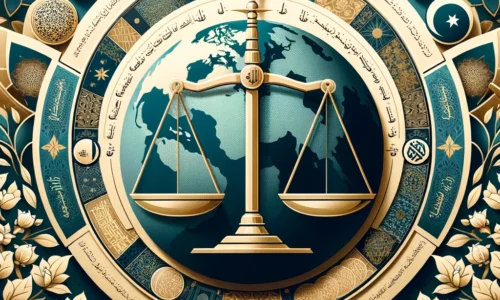
LAW 253: Islamic Constitutional Law is an in-depth exploration of the principles and applications of Islamic jurisprudence within the framework of constitutional law. This course examines the historical development of constitutional concepts in Islamic states and their relevance to contemporary Muslim-majority countries. Students will gain an understanding of the Sharia-based sources that inform constitutional structures, including the Quran, Sunnah, Ijma (consensus), and Qiyas (analogical reasoning).
The curriculum covers key themes such as the Islamic concept of governance, the role of the ruler and the ruled, the rights and duties of citizens, the separation of powers, and the judicial review in Islamic jurisprudence. Students will analyze contemporary constitutional documents from various Islamic countries, comparing how these nations integrate Islamic principles with modern state governance.
Through case studies, students will explore contentious issues such as the application of Hudud punishments, gender equality, minority rights, and the balance between religious norms and secular laws. The course also addresses the challenges and debates surrounding the implementation of Sharia in multi-religious and pluralistic societies.
Overall Objectives for this Course:
By the end of this course, students should be able to:
- Outline the historical development of Islamic constitutional law.
- Identify the Sharia sources that underpin constitutional governance in Islamic jurisprudence.
- Analyze the Islamic principles of governance, including the rights and responsibilities of rulers and citizens.
- Compare constitutional structures and practices across Muslim-majority countries.
- Evaluate the integration of Islamic law with modern constitutional frameworks.
- Discuss contemporary debates on Sharia law, human rights, and secularism in constitutional contexts.
- Assess the role of Islamic law in addressing modern governance challenges.
- Reflect on the future of Islamic constitutional law in a globalized world.
Curriculum
- 15 Sections
- 0 Lessons
- 14 Weeks
- Reading ProjectA recommended reading to cover this topic comprehensively is “The Renewal of Islamic Law: Muhammad Baqer as-Sadr, Najaf and the Shi’i International” by Chibli Mallat. This book provides an insightful exploration into the integration of Islamic principles with contemporary legal frameworks, making it an ideal resource for students and scholars interested in Islamic constitutional law. It delves into the contributions of Muhammad Baqer as-Sadr, a key figure in modern Islamic legal thought, offering a deep understanding of the development and application of Islamic law within the context of modern governance and constitutionalism.0
- Week 1: Introduction to Islamic Constitutional Law0
- Week 2: Historical Evolution of Islamic Governance0
- Week 3: Sharia Sources and Constitutional Governance0
- Week 4: The Islamic Concept of State and Sovereignty0
- Week 5: Rights and Duties of Citizens in Islamic Jurisprudence0
- Week 6: The Separation of Powers in Islamic Governance0
- Week 7: Judicial Review and the Role of Islamic Courts0
- Week 8: Comparative Analysis of Islamic Constitutional Documents0
- Week 9: Hudud Punishments and Constitutional Debates0
- Week 10: Gender Equality and Minority Rights in Islamic Constitutions0
- Week 11: Sharia Law in Multi-Religious Societies0
- Week 12: Case Studies: Sharia Implementation Challenges0
- Week 13: Contemporary Debates: Secularism vs. Religious Law0
- Week 14: The Future of Islamic Constitutionalism0
Instructor